Combined Engine Configuration and Speed Optimization for Fuel Savings on Cruise Ships
Ocean Engineering, 2025 research on fuel-saving cruise ship operation and engine configuration
Overview
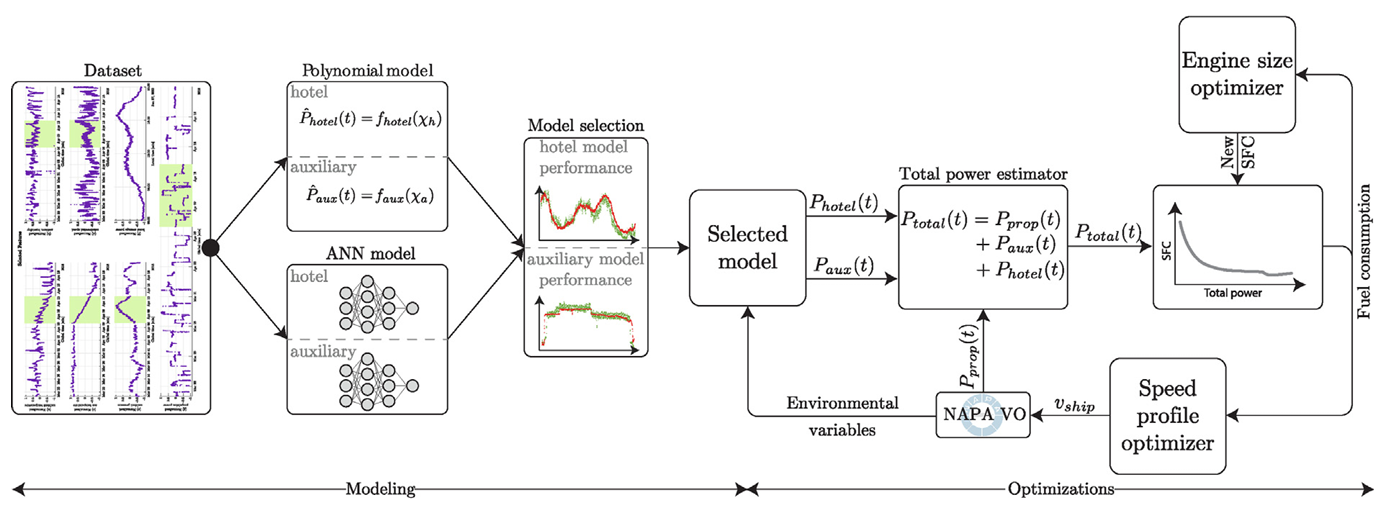
This published Ocean Engineering paper presents a data-driven optimization framework
for cruise ships that combines hotel and auxiliary load prediction, the NAPA Voyage
Optimization API for propulsion power estimation, dynamic programming for speed profile
optimization, and a genetic algorithm for engine sizing. The method is designed to minimize
fuel consumption while keeping the ship on timetable.
Problem Statement
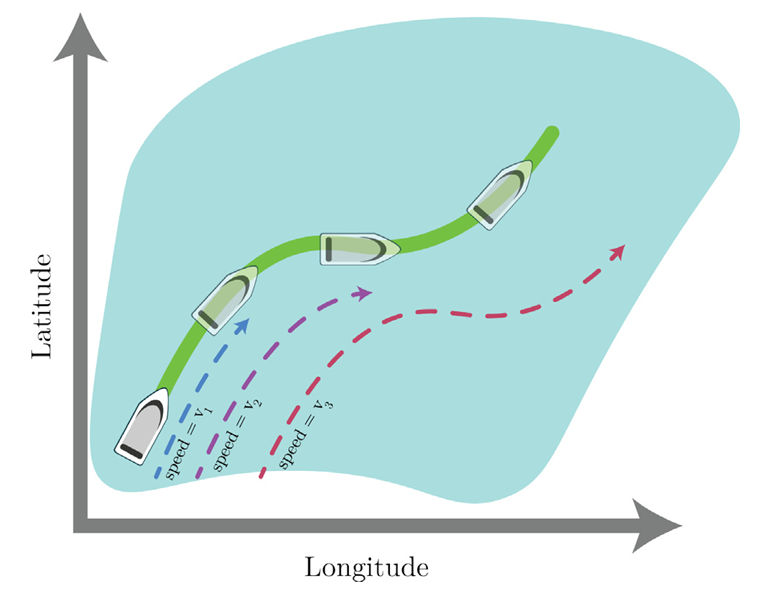
Cruise ships have a more complex power demand profile than many other vessels because total power includes propulsion, hotel load, and auxiliary systems. Traditional fixed-speed operation does not fully use engine efficiency curves or adapt well to changing weather, voyage conditions, and onboard load variations.
Solution Approach
Key Components
- Data-driven load modeling using operational cruise ship data
- ANN models for hotel and auxiliary power prediction
- NAPA API for weather-aware propulsion power estimation
- Dynamic programming for optimal speed profile planning
- Genetic algorithm for engine size optimization
- Comparison between conventional and next-generation engines
Results
- Up to 3.3% fuel saving with conventional engines
- Up to 2.7% fuel saving with next-generation engines
- Additional approximately 0.5% fuel reduction through optimized engine sizing
- Extending voyage duration from 32 hours to 34 hours increased fuel-saving potential up to 6.08% for conventional engines and 5.41% for next-generation engines
- The framework supports real-time decision support for cruise operation
Technical Implementation
The framework combines machine learning, optimization, and ship operation data in one workflow. Total power demand is modeled as propulsion plus hotel plus auxiliary power. ANN models predict hotel and auxiliary load, NAPA estimates propulsion power under weather conditions, and the optimization layer selects speed and engine combinations that reduce fuel consumption.